“Diente de León”,
Viotá (2022-2023)
Proyecto ejecutado

The Diente de León Initiative was born after the documentary “The Faces of Policarpa Viotá, Chapter 2”, which shows the current situation of women leaders, victims, professionals and ex-combatants;aware of the constant violation of the human rights of women and girls, two women created the initiative in order to strengthen their rights and life projects.
We can only guarantee peace if there is a total guarantee of the rights of women and girls.
“The municipality of Viotá is located in the province of Tequendama, in the department of Cundinamarca, 86 kilometers from Bogotá, capital of Colombia. It has 14,114 inhabitants, of which 7,187 are women. The municipality was one of the hardest hit by the violence of the armed conflict in Colombia:
Viotá: 1991- 2013 Front 21, Front 22, 25 and 42 of the FARC, Autodefensas del Casanare, Autodefensas, Paramilitaries – Aguilas negras. Gradual forced displacement due to fear, selective assassination of political leaders, public officials and police officers. Forced recruitment of minors, forced disappearance and murder. Confinement and market limitation. Extortion and vaccination. Rescue and death of a foreigner kidnapped by FARC. Threats and forced disappearances. Death and dismemberment of 5 people. The biscocho massacre (2003). Death of a soldier by an antipersonnel mine. The paramilitaries arrived (2003) to colonize rural areas, which generated multiple displacements from the urban area to the municipal capital”.
DIAGNOSIS OF POPULATION VICTIMS OF THE ARMED CONFLICT
DEPARTMENT OF CUNDINAMARCA
CUNDINAMARCA DEVELOPMENT PLAN 2016-2019
“UNITED WE CAN DO MORE”.
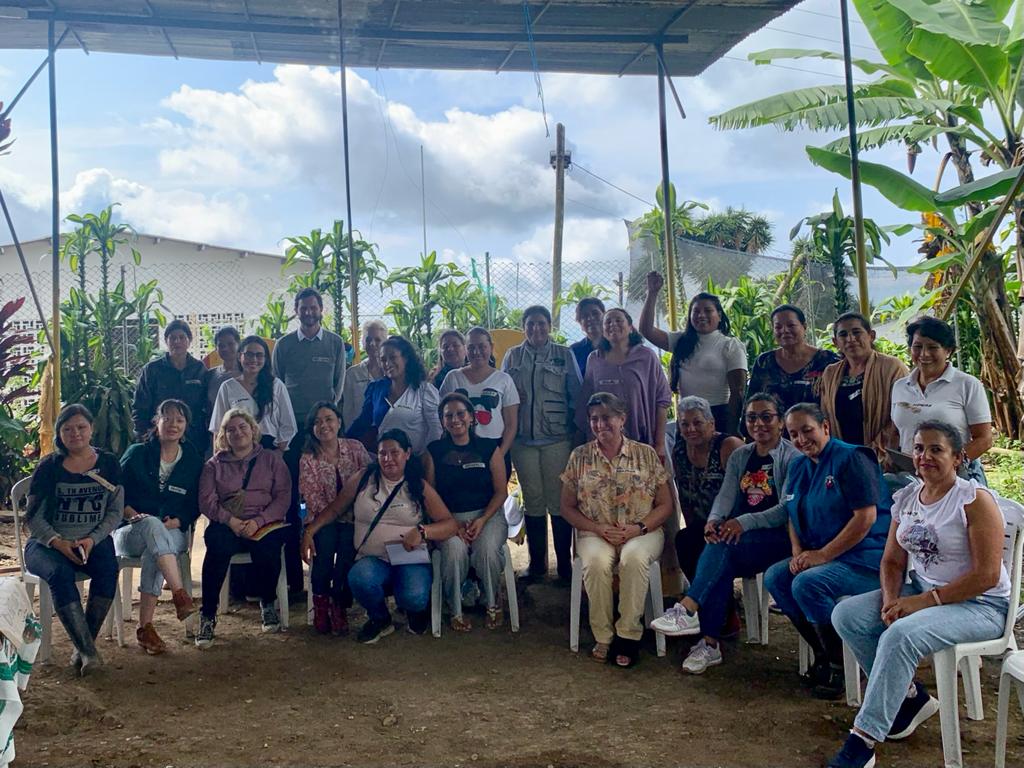
The project is developed with a small group of women leaders from urban, peri-urban and rural sectors in Viotá. This is one of the many Colombian municipalities with less than 50,000 inhabitants where state aid, resources and programs for people who have suffered from the country’s violence have not benefited the entire community.
When talking to women from some of the 58 villages in the territory of Viotá, they stated that for years they have been invisible, despite the fact that many of them are leaders of the place where they live. There is a lack of communication and a support network that facilitates the reconstruction of a social fabric that encourages them to work as a community to learn, strengthen their rights, grow and multiply the knowledge they have acquired.